
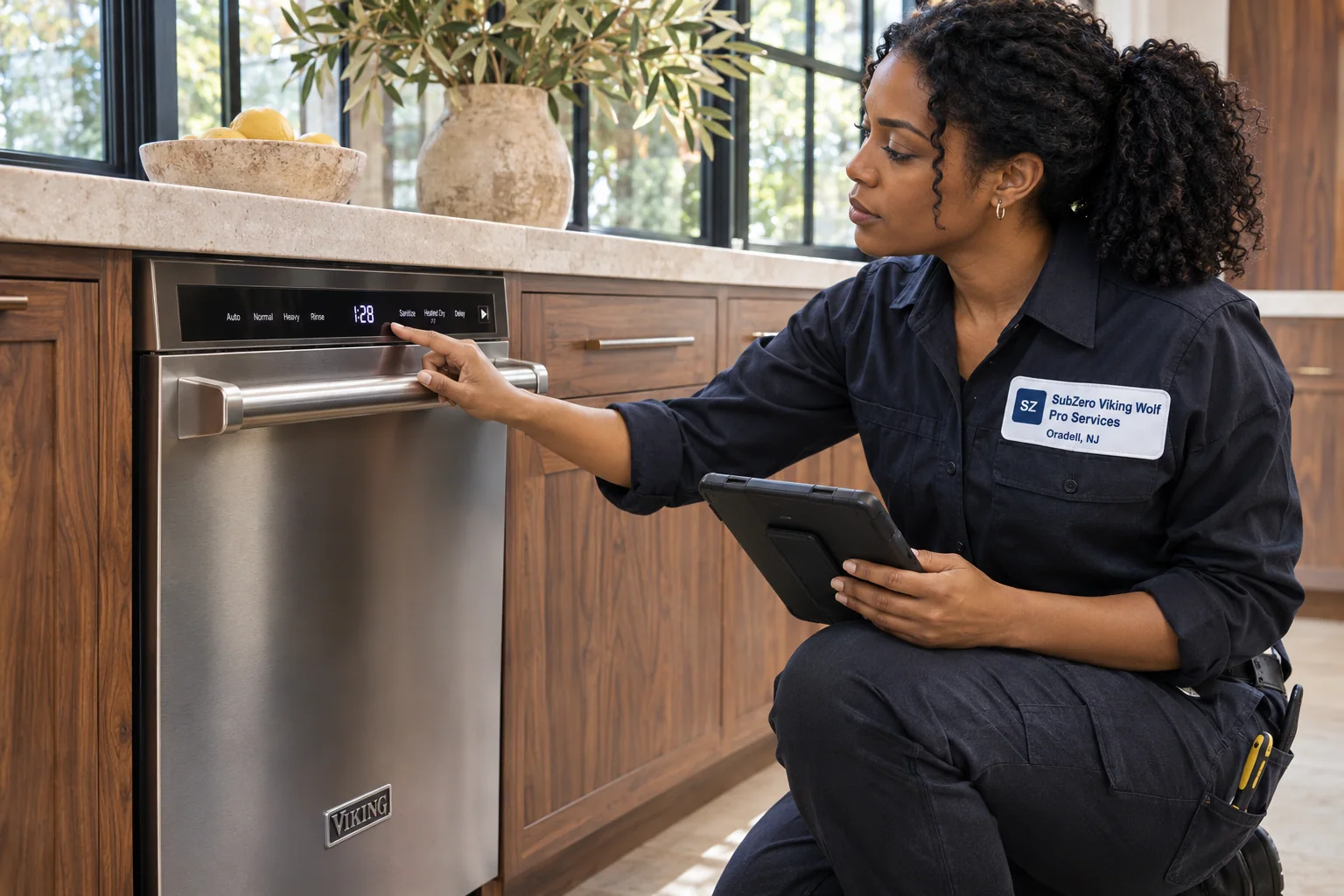
What the inspection needs to establish
The technician adapts the inspection to the installation and reported behavior. These are areas to evaluate, not a list of parts to replace.
- Establish when in the cycle the problem occurs.
- Inspect accessible sealing, drainage and installation conditions.
- Evaluate fill, circulation, drain and heating operation as relevant.
- Check the sensors and controls indicated by the observed behavior.
What you may be noticing
Keep observations separate from assumptions. Report the affected zone, cavity or cycle stage, what the controls show and what the appliance actually does. That gives the diagnostic visit a useful starting point.
- A new pump or circulation sound.
- Water remaining after the cycle.
- A leak appearing during operation.
- Dishes coming out with residue.
- A cycle stopping before completion.
What the symptom tells us
Standing water and poor cleaning are not automatically the same fault. Describe the amount and location of water, the stage when operation changed and any control message. The inspection can compare filling, circulation, drainage and relevant heating functions. A proposed part should follow those findings rather than being selected from the symptom alone.
Before the visit
Stop running the dishwasher if it is leaking or has an electrical concern. Record when the cycle stopped and whether water remains. Do not remove the installed machine, bypass its latch or reach into powered components.
Clear a safe working area, keep any displayed message and mention custom panels or restricted access. Do not dismantle the appliance in preparation.
Separate the signal from the cause
Water in the cabinet at the start of a service request does not identify a drain-pump fault by itself. Cycle timing and the amount and location of water help guide the inspection.
Viking service requests can involve cooling, cooking, ice making or dishwashing. Identifying the appliance and its affected function keeps the discussion focused before a diagnosis is made.
Diagnosis, approval and repair
The diagnostic/service call is $149, credited toward an approved repair. After diagnosis, you receive an itemized repair quote before work begins. Genuine OEM parts are used.
Availability, including same-day or emergency requests, depends on the address and schedule. Sending a request does not reserve an appointment.
The 1-Year Parts & Labor Warranty covers parts installed and labor performed under normal use. It excludes new unrelated faults, misuse, power surges and work performed by others after the visit.
Sealed-system and refrigerant work is performed by an EPA-certified technician. Manufacturer names identify equipment serviced; this is independent service.
From findings to a decision
The diagnostic fee and the repair quote are different steps. Describe the appliance and location first, then review the proposed parts and labor after testing. The team confirms the appointment and scope; a website request alone does not book a time.